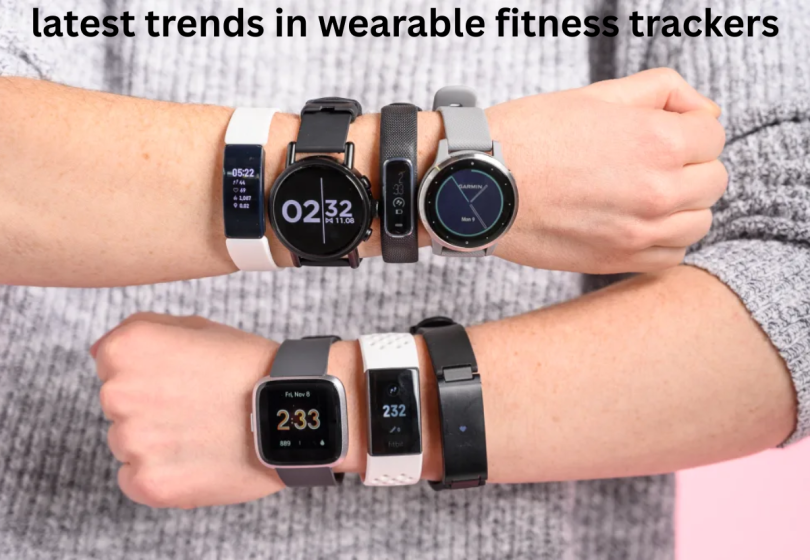

In today’s fast-moving world of health tech, staying updated with the latest trends in wearable fitness trackers is more important than ever. These devices have evolved far beyond simple step counters—they now offer advanced features like sleep analysis, heart rate monitoring, stress tracking, and even AI-driven coaching. Whether you’re a fitness enthusiast, a casual walker, or someone focused on overall wellness, understanding the newest innovations in wearable trackers can help you make smarter choices for your health and lifestyle.
1. Screenless, Subscription-Free Fitness Trackers

What’s New
Devices like the new Polar Loop are ditching screens altogether. Instead, they quietly collect your data—steps, workouts, sleep, heart rate—and sync it to an app. No buzzing, no social notifications, and no constant charging worries.
Benefits
- Minimal distractions — focus on your workout, not your screen.
- Better battery life (7–10 days average).
- No monthly fees like WHOOP or Fitbit Premium.
- Ideal for people who want to track data passively.
Drawbacks
- No real-time stats on the device.
- Must open the app to view progress or get insights.
- Might not appeal to people who want an all-in-one smart experience.
2. Smart Rings: Sleek, Discreet, and Powerful
What’s New
Say hello to wearables you don’t even notice. Brands like Oura Ring, Samsung Galaxy Ring, and Ultrahuman Ring are squeezing major health-tracking power into a tiny form.
They track:
- Sleep quality
- Stress levels
- Heart rate & HRV
- Activity and recovery
And the new Samsung Galaxy Ring 2 is rumored to bring temperature sensing, smarter AI coaching, and improved battery life.
Benefits
- Extremely discreet—great for 24/7 wear.
- Comfortable, even while sleeping.
- Stylish and looks like normal jewelry.
- Great battery life (up to 7–10 days).
Drawbacks
- No screen—must rely on app for data.
- Can be expensive (often $250–$400).
- May not be ideal for intense workouts (e.g. weightlifting).
- Limited gesture control features (compared to smartwatches).
3. AI-Powered Coaching & Smart Feedback
What’s New
Wearables now go beyond basic tracking—they use AI to give you personalized suggestions. Based on your sleep, stress, activity, and heart data, they might say:
“You should take it easy today—you’re not fully recovered.”
“You slept well. Today’s a great day to train hard.”
Brands like Fitbit, Garmin, and WHOOP are leading in this.
Benefits
- Feel like you have a coach in your pocket.
- Motivation tailored to you.
- Helps prevent burnout and injuries.
- Builds smarter workout habits over time.
Drawbacks
- AI suggestions aren’t always 100% accurate.
- You may ignore advice if you don’t trust the algorithm.
- Can create stress or guilt if you’re not “hitting targets.”
4. Advanced Biometric Sensors
What’s New
Today’s fitness trackers can do much more than count steps. High-end wearables now measure:
- ECG (Electrocardiogram)
- Blood oxygen (SpO2)
- Skin temperature
- Stress levels
- Menstrual cycle tracking
- Blood pressure (in select models)
Soon, we’ll likely see non-invasive glucose monitoring and hydration tracking too.
Benefits
- In-depth insights into your overall health.
- Can help detect illness early.
- Supports more holistic fitness tracking.
Drawbacks
- May overwhelm casual users with too much data.
- Accuracy can vary depending on skin tone, fit, or sensor quality.
- Not a replacement for professional medical devices.
5. Smart Clothing & Battery-Free Tech
What’s New
Imagine a shirt that tracks your posture or leggings that monitor muscle recovery. That’s real. Brands are developing smart textiles that are soft, washable, and sensor-embedded.
Also emerging: battery-free trackers that draw power from your movement, body heat, or solar energy.
Benefits
- Extremely comfortable.
- No need to remember to wear a separate device.
- Battery-free = no more charging!
Drawbacks
- Still early in development—limited availability.
- Expensive and hard to find replacements if damaged.
- Limited brands are offering reliable options right now.
6. Healthcare Integration & Medical-Grade Use
What’s New
Fitness trackers are getting approval for medical-grade tracking. Some now share your data with:
- Doctors
- Health insurance providers
- Wellness programs
This opens the door to preventive healthcare, early illness detection, and even discounts on insurance.
Benefits
- Encourages healthier lifestyle with real incentives.
- Helps doctors monitor chronic conditions remotely.
- Turns everyday wear into a healthcare tool.
Drawbacks
- Raises privacy and data-sharing concerns.
- Not all users are comfortable sharing health data with third parties.
- You may need to consent to data use terms.
You may also like to read these posts:
Music Theory Basics for Songwriters: The Complete Guide (With Benefits & Drawbacks)
The “Top 100 Songs of All Time List”: A Deep Dive
The Best Productivity Apps for Remote Workers: A Deep Dive into What Works (and What Doesn’t)
Best Gaming Laptops Under $1000 Casual Gaming: Your Ultimate 2025 Guide
7. Hyper-Personalized Experience
What’s New
Your wearable learns your preferences, routines, sleep patterns, and even diet. Apps adapt to your goals and feedback. The result? A fitness tracker experience made just for you.
Benefits
- Feels more intuitive and useful.
- Improves motivation with tailored suggestions.
- Reduces one-size-fits-all frustrations.
Drawbacks
- Takes time for the AI to “learn” you.
- May still give irrelevant suggestions if data is incomplete.
- Not all devices offer this level of personalization yet.
Summary: Benefits & Drawbacks at a Glance

| Feature/Trend | Benefits | Drawbacks |
| Screenless Trackers | Minimalist, long battery, no distractions | No real-time data display |
| Smart Rings | Stylish, discreet, sleep-friendly | Pricey, no screen, limited gesture control |
| AI Coaching | Personalized tips and motivation | May not always be accurate |
| Advanced Biometric Sensors | Holistic health monitoring | Overwhelming data, sensor limitations |
| Smart Clothing/Battery-Free Tech | Comfort, seamless tracking, eco-friendly | Expensive, early stage of adoption |
| Healthcare Integration | Medical insights, insurance perks | Privacy concerns, may feel intrusive |
| Personalization | Custom plans and tips based on YOU | Takes time to calibrate, not all brands offer this yet |
Final Thoughts
The latest trends in wearable fitness trackers show just how far we’ve come. We’re not just tracking steps anymore—we’re tracking sleep cycles, hydration, stress, recovery, posture, and so much more. And with smart rings and AI-driven wearables, it’s easier than ever to stay healthy without adding clutter to your life.
But like any tool, the value depends on how you use it. Want to casually track your walks and sleep? A budget wristband might be enough. Want to train smarter, recover faster, and understand your body better? Then investing in one of these newer devices might be worth every penny.
FAQs
1. What is the most popular trend in wearable fitness trackers right now?
Smart rings are one of the hottest trends in 2025. They offer powerful health tracking features in a small, stylish form—tracking sleep, heart rate, stress, and even temperature—all without a screen.
2. Are screenless fitness trackers better than smartwatches?
Not necessarily “better,” but different. Screenless trackers like the Polar Loop focus on simplicity, longer battery life, and fewer distractions. They’re perfect for people who want passive tracking without smartphone-like features. Smartwatches are better for those who want real-time feedback and more features (like messages, GPS, etc.).
3. Can wearable trackers really improve my health?
Yes—when used consistently. They help you stay accountable by tracking steps, workouts, sleep, and even stress. Many offer personalized coaching and recovery tips, which can lead to healthier habits over time. However, they should be used as support tools, not replacements for medical advice.
4. How accurate are fitness trackers in 2025?
Modern fitness trackers have come a long way in accuracy—especially high-end models. Heart rate, sleep stages, and activity tracking are generally reliable. However, metrics like calorie burn or blood oxygen levels may vary depending on the brand, skin tone, and how tightly the device is worn.
5. Do I need to pay a monthly fee for advanced features?
Some trackers (like WHOOP or Fitbit Premium) require a subscription to access full data insights, coaching, and reports. However, many newer trackers, like the Polar Loop, are subscription-free and still offer excellent data tracking.